- Jul 8
“The ability to excel:” Looking back on how the SUCCESS Scholars project is enabling dreams
- Alicia Kiremire
One of my first grant spotlight blogs was with Dr. Krystal Cruse.
That was nearly four years ago, and now Dr. Cruse is nearing the end of her $1.5M National Science Foundation grant! I was excited to hear how her SUCCESS Scholars project has gone and to meet Hanna Elliott, one of the students who has been impacted by the grant.
Welcome to our conversation.
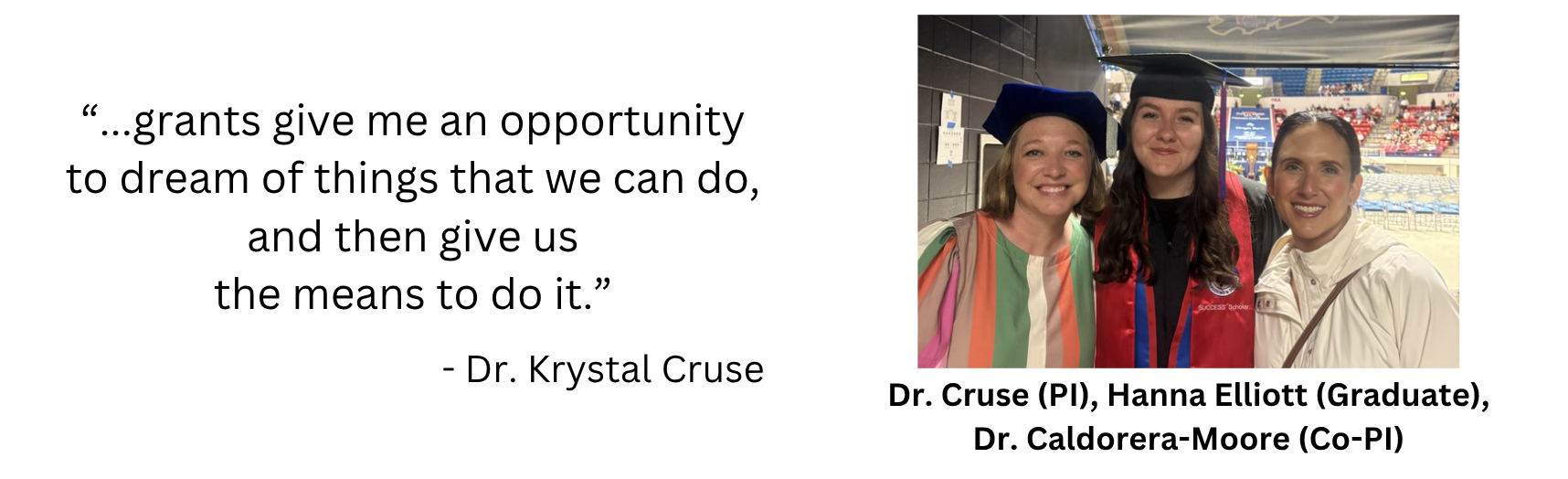
First of all, Dr. Cruse, can you tell me more about your personal story and how it led you to creating this project?
KC: Yes, back around 2017, I was working with Dr. David Hall, my Academic Director and my mentor. He was passing on the first year engineering curriculum at Louisiana Tech to me, and I was working with him and taking more responsibility with it. He mentioned that we should improve student retention in the first year program, so we were trying to think of ways to engage the students more.
We talked about the need for students to have more contact hours with their instructor and to have access to live equipment in the classrooms, but also to work more problems, ask more questions, and build a community with one another to get to know each other better. We knew this community would translate beyond just the first year. Dr. Hall encouraged me, and we came up with this idea of having a Friday version of the first-year class. The traditional class meets Monday/Wednesday for Engineering 120, which is the first course that students take. We thought, let's add a time slot Friday and do some extra supplemental instruction with the students.
And the results of that new course were phenomenal; we got really great impact. The students were retained at a higher rate compared to their cohort, and they averaged about 10 points higher on their exams.
At that point, I was a Lecturer, not necessarily looking for grants or doing research because my focus was instruction. But Dr. Hall really pushed me and showed me a solicitation for an NSF grant. And he said, “I really think you should do this.” He really encouraged me, and that was a big push from him to see that I was capable of doing something outside of what I normally would have done. So under his guidance, we wrote this proposal for the SUCCESS Scholars Program.
I love it. So what does the SUCCESS Scholars project look like? What are your goals, and what kind of activities do you do?
KC: It's an NSF S-STEM grant, which helps support students from their entry into the program until they graduate. Our entry point was first year, so we got a really cool experience with having students in their very first year all the way throughout their college experience.
Our high level goals are to not only retain, but also to help students enter the STEM workforce or graduate school. In order to reach that goal, we have worked to create a community to help the students feel connected with each other and also have provided a high level of academic support.
From the beginning, we envisioned that our support would evolve throughout the time that the students were at Louisiana Tech. The first year, we put a really big emphasis on academic support and faculty mentors. We wanted to set a strong foundation early on such that students were able to translate those skills later on. The academic support was very heavy early, and then it shifted more into career, social, and professional development so the students could have those skills to translate once they graduate.
Can you give me some examples of academic support?
KC: There were two big pillars, especially in that first year of academic support. One is the extra meeting on Fridays, similar to the successful pilot I mentioned. The SUCCESS Scholars met Monday, Wednesday, and Friday, giving them extra contact hours with me as their instructor and more time in the classroom with equipment. I would give them a quiz every Friday, and they got extra problems and guidance going deeper in some activities.
The other part was supplemental instruction. We gave them three to four days a week in the evening with peer mentors. We had at least two upperclassmen peer mentors who were successful in their classes. They worked with myself as the engineering instructor and Mr. Carl Boyet, the math instructor. We stayed as the SUCCESS Scholars’ engineering and math instructors every quarter for that first year. And so myself and Mr. Boyet would meet with the peer mentors and plan out structured concepts that they would do within supplemental instruction.
We had worksheets that students would do, or we had specific topics that maybe they weren't doing well in. One of the things that was really cool and unique was that it wasn't math and engineering separately. We tried to create a balance between math and engineering support. Sometimes the session focused more on math, and other times it focused more on engineering concepts or the project, depending on what students needed most. But overall, we tried to include a little bit of both in each session so students could see that the concepts were connected and not completely separate. This helped reinforce the need for balanced studying across both courses, which are both important parts of the first-year engineering experience.
Ok great, and then can you give an example for the career, social, and professional development side?
KC: One of the things that we did not necessarily write into the grant, but we started doing, was our weekly lunches. Those were so great. We noticed that the students were homesick. A couple of the students were talking about how they wanted a home cooked meal. And some of the grant team said, “hey, let's get together and make a meal for them.” And that became an opportunity. At least for the first three years, we did lunches every week. Last year we did them maybe three times a quarter. But when we were able to do it every week, we also occasionally integrated in some professional development. We brought somebody in from the financial aid office. One time we brought some students in to talk about joining organizations. Ashton Ward spoke as a graduate student talking about her experience and how she was as an undergrad and things they should do.
I think that was one of the most rewarding things because it really had an impact. And it's one of the things the students say they loved about the program because it was an opportunity to just chill and eat food. Especially as the students started to split off into their different classes, it was a way to bring them back together. And then every now and then we'd have a little nugget that we would put in there.
Ok awesome. Hanna, your turn! Can you tell me a little more about yourself and how this program has impacted you?
HE: There's an endless number of ways this has impacted me. I just graduated from Louisiana Tech. I'm originally from Texas. I have a twin sister, and we both wanted to go to Tech together, so that's how I got here. I majored in Biomedical Engineering, and now I'm doing Electrical Engineering for my Master's degree.
Financially, SUCCESS Scholars was a lot of help because, like I said, I am a twin. So two kids going to college at once was a pretty big burden. And we weren't from Louisiana, so we didn't have TOPS.
Past that, I'm not entirely sure I would even be an engineer right now if I wasn't in the program. So many of my college friends who were in engineering, but not in SUCCESS Scholars, are not engineers today. I saw how bad they struggled, and most of them ended up switching majors or dropping out completely because it can be so intimidating, especially when you come from a really small school.
We came from a very small high school. We never did anything engineering related. And in the SUCCESS Scholars program, you get to college on your first day and you have professors who are really looking out for you and wanting you to succeed. I think that helped me so much to beat the imposter syndrome of feeling like I can't do this or I don't belong. So overall, I think SUCCESS Scholars has been incredibly important for my success as an engineer.
But also it gave me the best friends I've ever had. So many people who I can still depend on and I still talk to daily who made me feel like I wasn't alone. The program helped me build a community there, so I didn't ever feel like I didn't have anybody to talk to because we all shared the same experience. And it was just so easy to welcome them into my life and for them to welcome me into theirs because we saw each other so much. So yeah, friends that I'll definitely have forever.
And then also a network of professors who really care about me, and really cared about making sure we all succeeded. We felt like we were being heard, and we knew what was going on. Having that network of older, established engineers is very helpful in making it feel not impossible. Dr. Cruse, Dr. Caldorera-Moore, and Dr. Hartman knew I could do it, and they made sure to tell me how confident they were in me and my abilities, which helped me grow confidence in myself for sure and made me feel like I could step out of my comfort zone. I started in biomedical engineering, and that's where I got my bachelor's. But through those relationships, I developed an interest in electrical engineering and I had those people who could help me see how that could fit into my life and my career. And that has led me to doing a Master's degree at Louisiana Tech. So I get to continue doing things that I love and I'm passionate about.
I think that's really what the Scholars program has given us all, the ability to excel in the things that we care about. That's so exciting. Not only did it help me in my undergraduate years be confident and excited about what I'm doing, but also taking that into graduate school.
And lastly, I am currently doing an internship at my absolute dream company. Even whenever I was down and I didn't believe I would ever get here, Dr. Cruse always did believe I would and made sure I knew that. And she connected me with people who could help me get there.
So there's no shortage of ways this program has impacted me in college, but also my life. The professors made sure that we knew they cared about us truly, and not just surface level. Dr. Cruse would even invite my twin sister to some of our events, which meant more to me than I could even say. My sister's professors didn't even know she was a twin, but mine would ask how Presley was doing. So just so many ways that this group has meant so much to me.
I love it so much. Thank you for sharing. I really see a connection. Dr. Cruse, you talked about Dr. Hall seeing things in you and bringing them out, encouraging you more than you thought was possible. And then you've now turned around and done that for somebody else. It's beautiful. Hanna, I hope you do the same, that you find somebody that you will encourage.
HE: Yes, I agree. I would like to add one last thing. As a woman in engineering, the SUCCESS Scholars program really gave us so many women role models to look up to and know that this is something that you can do. With Dr. Cruse and Dr. Ashton, there were so many great examples for the girls in the program, and even the boys. It's important that all of us see that happening. So I think that was great too.
All right, awesome. So the next question should be a fun one. Can you each tell me your favorite memory so far from SUCCESS Scholars?
HE: As a whole, I would say the lunches. It was such a great break in your week. You could be having the worst week ever, and then you get to have lunch with these people that you really enjoy spending time with. Especially if you had to get up super early and all of the professors worked really hard to bring us this delicious meal, it just makes you feel so good.
KC: I loved the lunches too. Let me think of another one. We did a brunch for all the graduates this past spring. I made a PowerPoint, and as I looked at all the photos of everybody I was just so proud.
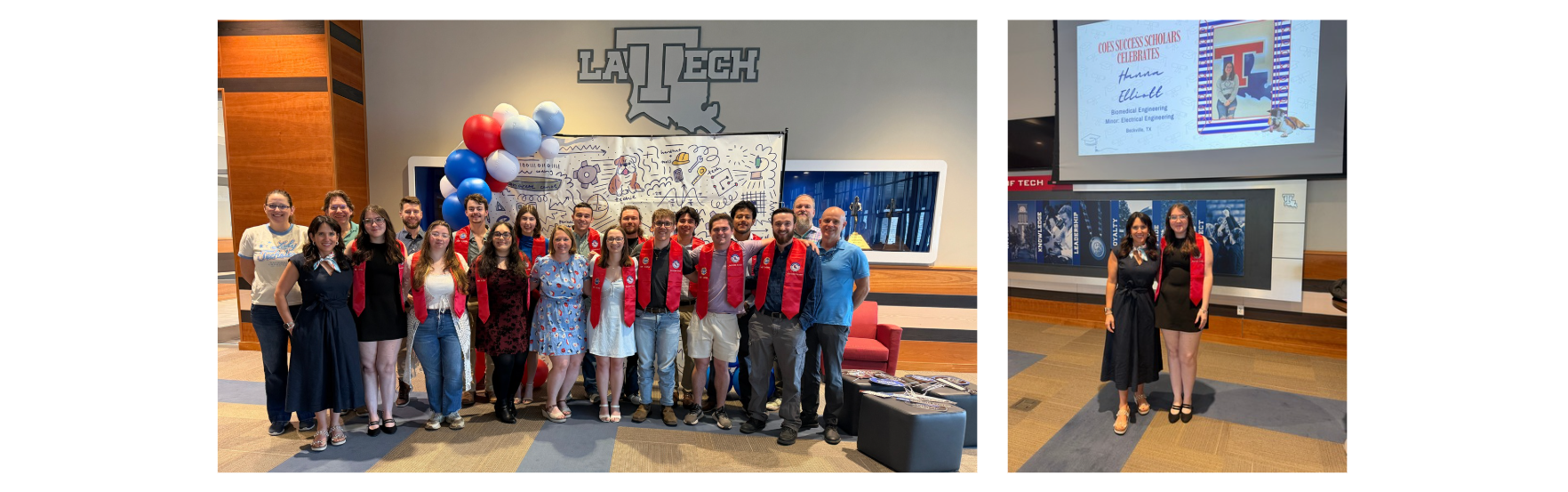
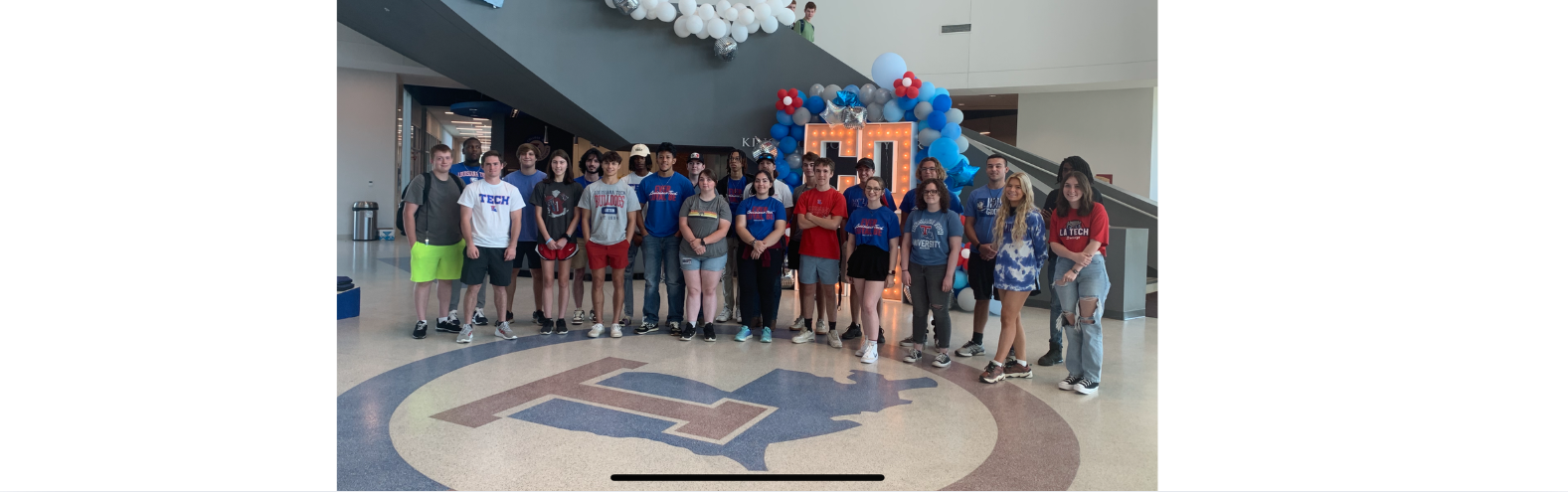
One of the photos was the very first day, and we had no idea what we were doing, honestly. We didn't even have the money yet because NSF had only told us it was favorable to be funded. We wanted to hit the ground running because we didn't want to waste any time. And so we told the students, “hey, there's a potential for funding. We don't know if we're going to get it.” And all these students just took a chance on it. So I just remember seeing that photo and being like, what a special group of students. I'm just so proud.
I love it. That’s awesome.
KC: Another great memory for me is the Friday classes in that first year. That's when I got to really know the first cohort. Just being able to get something going and having the faces that fill the program and getting to know them and them being part of my family now. And then the second cohort, they're so wonderful too. They're just two different personalities; it's like my children.
And then the eclipse trip. We got to take a bunch of students to the eclipse to see totality, and some of them had never even been to Texas before. We were just literally over the state line, and they were so excited because they'd never even been out of the state of Louisiana. And that was just so special that they were able to do that. We have so many good memories.
From a grant perspective, it's cool to hear some things you planned in from the beginning in your proposal; and some you just saw a need and an opportunity, and as a team, y'all pivoted.
KC: Yeah, we did. We definitely did some learning and pivoting during the whole process.
We will switch now to grants. Dr. Cruse, what does grant funding mean to you?
KC: There are so many layers to this question for me. I mentioned earlier that I was a Lecturer. And so my primary focus was instruction. When I started writing this grant, Dr. Hall said, “Krystal, I really think you have an opportunity to switch over to a tenure track position.” It was something I hadn't really considered before, but I had done some research in engineering education. I had some publications, and then I was working on this grant. His believing in me was hugely important because then it changed the trajectory of my career. And so with doing the grant, I switched over to a tenure track position. I say that because grant funding is hugely important when you have a tenure track. And so it’s my life and what I need to continue my career and the big goals of things that I'm passionate about.
My core and my passion is always, regardless of my title, engaging students and retaining students and giving them an experience where they're set up with the best foundation moving forward. I can do that as a Lecturer or Assistant Professor. But as an Assistant Professor, I can actively seek grant funding that can help really create systemic change programs or transformative things that can really impact students in a big way. And to hear Hanna talk about the way it's impacted her and the lifelong friendships and all of that, I feel so fulfilled. And so grants give me an opportunity to dream of things that we can do, and then give us the means to do it.
I love that! What is next for both of you?
HE: I'm interning right now, and pursuing my Master’s degree at Louisiana Tech. The end goal would be to return to Medtronic. I'm in Colorado right now. I want to be in Texas, but doing medical device R&D or engineering in general. I want to get more involved in the Society of Women Engineers (SWE). That's something I started doing my senior year. And like I said, there have been so many impactful women in the SUCCESS Scholars. I want to be able to give back and maybe inspire somebody the way that Dr. Cruse inspires us. So that's what I'm looking forward to.
KC: One of the big things that I'm working with the team towards, coming from the SUCCESS Scholars grant and seeing the impact on that first year, is wanting to translate some of that into the sophomore year. So I'm working with the team for a new grant proposal. We actually have a planning grant as seed money, and we are getting some ideas on potential changes and transformation of our sophomore curriculum to help support and retain students.
With our SUCCESS Scholars grant, we had such a strong first year academic support that in the sophomore year we had a lot of growing pains and learning. We need support in different places as well in that sophomore year. And so this next grant is that. So that's definitely a big thing that I'm working towards. The current SUCCESS Scholars S-STEM grant ends in spring this year, which is crazy. It's amazing how fast five years goes by. And so I'd like to resubmit to S-STEM with some lessons learned, keeping some of the really great aspects that we wrote into it but also found along the way.
What advice would you give to other people seeking grants?
KC: That's a good question. This is something that, Alicia, you don't really know. When I was writing the grant, I talk a lot about Dr. Hall, who really encouraged me. But I remember one time I sat down with you. I was really stressed about the proposal timeline and didn't know if I could get it done. This was the first big grant, first grant honestly, that I ever wrote. I'm so grateful that we were able to get it awarded, but I was stressed about the timeline. And you encouraged me to just do it. Sit down and write it out. You have this dream, you have this idea. At the very least, you'll get feedback on it, and that can help you make it even better for the next time you submit.
And so I would say for people seeking grants - don't sell yourself short. If you have a good idea, write it out. Seek advice from other people who have experience in that grant writing world or in this area that you're doing your grant for. Submit it. And if you don't get it, that's okay. Be encouraged by the fact that you were able to write something and submit it, and now you have a really great document that you can adapt and edit according to the feedback and resubmit. Don't be discouraged if you don't get it. The big part is writing it.
I want to give credit to the grant team as well. I'm the PI, but we had a great group of Co-PIs: David Hall, Mary Caldorera-Moore, Mitzi Desselles, and Charlotte Wilkerson. A grant of this size was not possible without all of those people helping. We met weekly to make sure it worked and make plans. And on top of that, we had a team of faculty mentors that also worked with us. And so another thing about grants is you don't have to do it alone. Setting up a great team of people that you can count on can help make huge impacts. Hanna talked about Dr. Hartmann and Dr. Caldorera-Moore and some other faculty members. If it were just me alone, the impact would not be as big.
Yes! Hanna, any closing thoughts from you?
HE: I could not be more grateful for this program, genuinely. And I think that all of the other students feel the same way.